

How Coherence Found Us.
In 2012, on Kauaʻi, the island was ground zero for GMO testing and experimentation, with restricted-use pesticides sprayed in open air near schools. Pesticides prohibited in the countries where they were produced, yet permitted here. Children were getting sick, and the impacts were falling most heavily on communities already carrying the greatest environmental and economic burdens.
A Rights of Nature ballot initiative to address the spraying did not reach a public vote.
But the path that opened was unexpected.
A scientist on the island approached us. His assessment was direct: too much subjective data, not enough objective data. He proposed building an independent research facility.
Before building anything, we went to the community. We began interviewing a wide cross-section of the island: Elders, youth, business leaders, parents, grandparents, government officials.
What happened next changed everything.
We began to notice something consistent. When we held a quality of attention and presence, people began opening in ways that had nothing to do with the questions we were asking. Sharing what had never been said aloud. Insight emerged. Tensions softened. What had been inaccessible in ordinary dialogue became available.
It happened across communities. Across differences.
Something shifted in the room.
We didn't name it yet. But we recognized the pattern. And we kept following it.
The same pattern appeared in a water collaboration project on the island. Multigenerational grievances ran so deep that neighbors could not hear one another. The work could not begin until the relational conditions existed for people to listen. As those conditions changed, new forms of dialogue and decision-making became possible.
The pattern was clear. The quality of relationship was shaping what could be perceived, understood, and acted upon.
We began to see it in other contexts.
In conversations supporting diplomatic dialogue, positions that had remained fixed began to soften when the conditions for listening were present. In forest gatherings bringing together scientists, funders, and conservation organizations, what had been framed as competing solutions gave way to a shared recognition of what the land itself required. In cross-sector collaborations, insight arose from a change in what participants were able to perceive together.
Across contexts, the same principle held. When coherence was present, different information became available. From their own inner awareness, from one another, and from the living systems around them.
What we were accessing was not new. This is a form of intelligence, and a way of knowing, long held and practiced within Indigenous knowledge systems and contemplative traditions. What was new was recognizing it as a capacity that could be cultivated deliberately, and applied within systems facing complex decisions.
We began to recognize when coherence was present. We built Coherence Lab to understand it. And we spent the next decade learning what becomes possible when coherence is the foundation.

A Decade of Practice
2007 — Rights of Nature campaign work begins in California and on Kauaʻi
2012 — Patterns recognized on Kauaʻi. A different path opens.
2015 — Coherence Lab founded. The capacity is named.
2016 — Women's Wisdom Keepers gather on Kauaʻi
2017 — 13 Wisdom Weavers gather on Kauaʻi from tribes around the world
2018 — Hawaiʻi's first Rights of Nature conservation easement established
2019 — Tree-planting organizations expand strategy to include protection of old-growth forests
2020 — Kaiāulu Council begins. Five years of weekly practice.
2023 — First New Moon ceremony. A global field of practice forms.
2024 — Resonant Research Council formalized. Ancestral Wisdom Collective launched.
2026 — White paper published. A decade of applied practice, articulated.
How coherence is cultivated and applied
We create the conditions where clarity, insight, and aligned action become available.
Coherence is a lived practice. It is how we listen, relate, and respond to a world in flux.
We cultivate coherence in three interwoven ways:
Coherence Cultivation. Developing the capacity to be in right relationship. Through ceremony, contemplative practice, and sustained engagement over time, attention stabilizes, perception sharpens, and the ability to remain present within complexity strengthens. Without it, nothing else holds.
Relational Field Creation. Creating the conditions where coherence becomes shared. When people gather with genuine presence and a consistent quality of attention, something becomes accessible that is not available to any individual alone. Collective intelligence sharpens. Collaboration deepens. What was previously unseen becomes visible to the group.
Systems Realignment. Bringing this capacity into the structures where decisions are made. How questions are framed. How information is interpreted. How choices are made under uncertainty. Coherence does not remain in the circle. It moves into how institutions perceive, deliberate, and act.
These are not separate domains. They are aspects of the same capacity, expressed across scale. A leader who cultivates presence brings that capacity into a relational field. What emerges in that field informs how systems are redesigned. What is learned in application deepens the practice.

What coherence makes possible.
Across years of practice, a consistent pattern holds:
When coherence is present, perception expands.
As perception expands, different choices become available.
When different choices become available, systems begin to shift.
These are not isolated outcomes.
They are repeatable under the right conditions.
What changes is not only how people feel or collaborate.
The conditions of knowing change.
A wider field of intelligence becomes accessible within oneself, within groups, and in relationship with the more-than-human world.
This is an epistemic shift. It changes what becomes knowable.
It also changes what reality is understood to be: not a collection of separate parts, but a living field of relationship in which perception, meaning, and action arise together.
Where coherence is cultivated, a consistent pattern becomes visible across contexts:
Leaders report a change in how they make decisions. They are less alone in the process. A wider field of intelligence begins to inform what becomes clear.
Scientists describe a shift in what they are able to perceive. Patterns that remain less visible in states of separation begin to register within coherent relationship. What they consider measurable begins to expand. Collaboration becomes less about alignment of positions, and more about shared perception.
In cross-sector gatherings, long-standing tensions begin to soften. Participants who could not previously hear one another become able to listen. New pathways for collaboration emerge where none were available before.
In gatherings where land, policy, and resource decisions are being shaped, a different relationship to the living world begins to inform what decisions are made.
Protection becomes primary. Attention shifts toward preserving what already stands.
In community contexts, conversations change.
What is unspoken becomes speakable. What is fragmented begins to come into relationship. The conditions for trust, once absent, begin to form.
Among youth, something else emerges. A sense of meaning. A feeling of belonging. A recognition that their presence matters in what they perceive.
Elders listen. Insight moves across generations.
This is what Coherence Lab continues to explore.
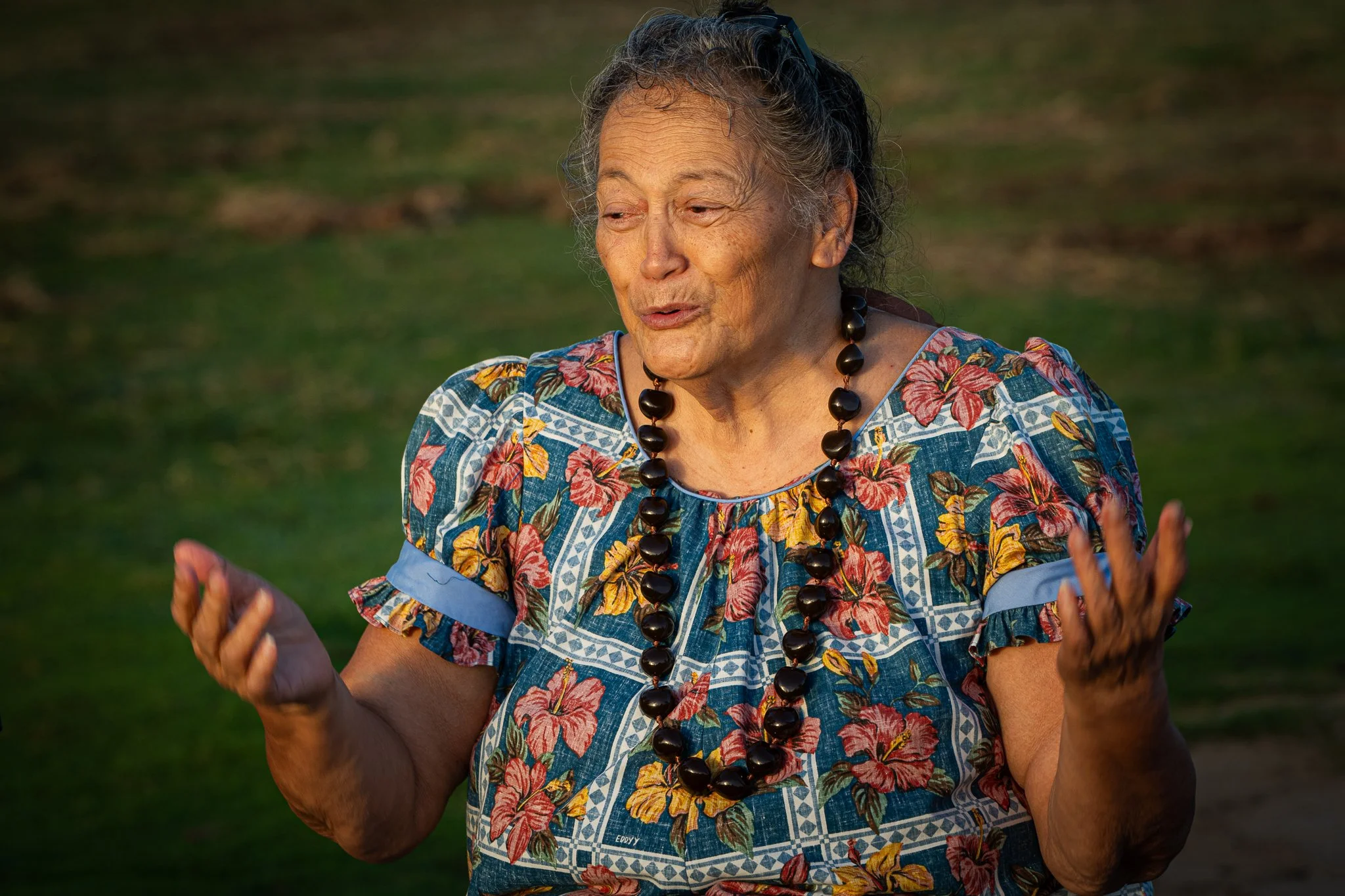
“There’s no work to be done, only alignment”.
Kumu Hula Puna Kalama Dawson
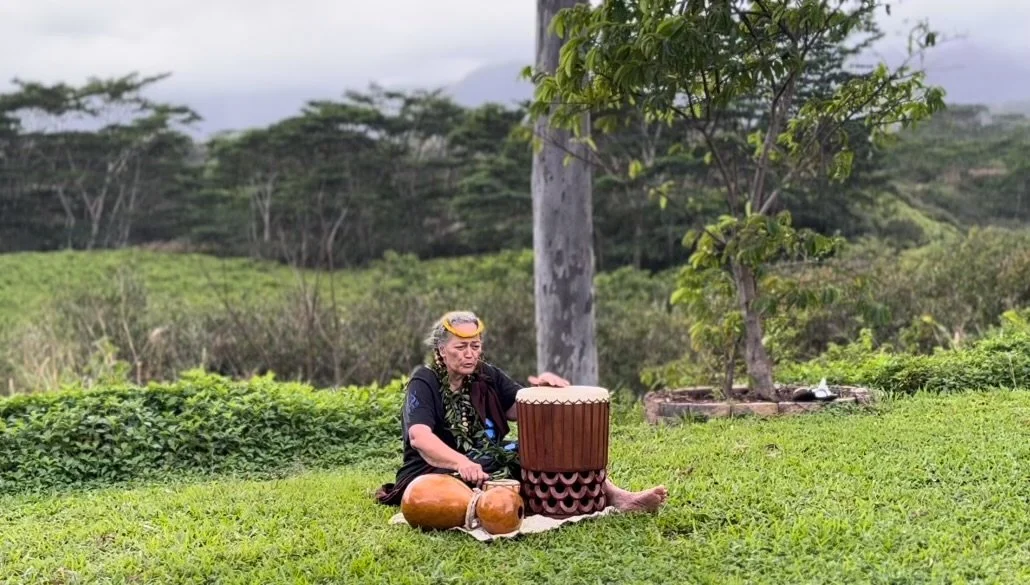
Nourishing the Field
Your generosity sustains the ceremonies, research, and gatherings that cultivate coherence between people, place, and planet.